
About egypt collection
This collection came to my mind as a spark of enlightenment. I was on a bus coming home from the studio. It was late at night.Street lights were red, i had a perfume on me "lord of misrule - by lush" and i was listening to a new dark album of podvall capella - tantra. And suddenly i felt it.


I felt that i know who my brand is for. It is a person who wears black, who loves tattoos, dark aesthetic, magic, mystery, night
As I have always been a huge fan of history and movies like "national treasure" or "Mummy", I understood that ancient egypt is one of the most thrilling things ever for me and the first collection should be about egypt.

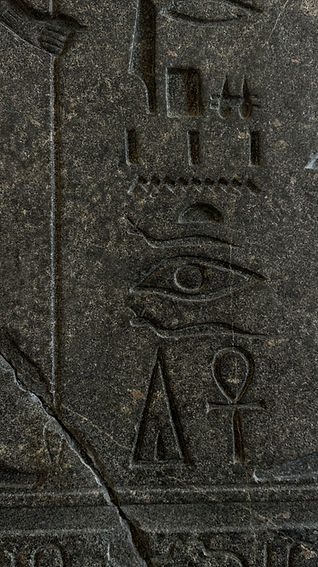
I went to the louvre museum in paris to get some inspiration
horns, moon, ankh, eye - i loved these symbols and included them into the collection


I carve every piece myself using jeweller's wax. Then I cast the pieces with lost wax or sand casting technique in my studio in Barcelona


liza karikh


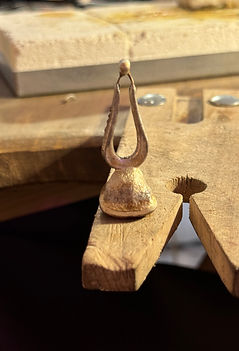
After the handmade samples are done we wear them to check if they are cool and comfortable
And then the production starts:
We have produced some of the pieces in stainless steel, but the original handmade sterling silver pieces will also be available.

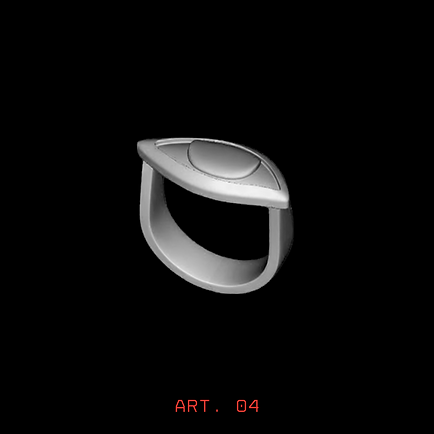
Main characters of this collection

Khonsu is a deity from ancient Egyptian mythology, primarily associated with the moon. He is often depicted as a young man with a sidelock of youth and sometimes with a lunar disk on his head. Khonsu's name roughly translates to "Traveler," reflecting the moon's journey across the night sky.
As a lunar god, Khonsu represented the passage of time and was revered as a protector of the nighttime. He was believed to influence the cycles of time, including the calendar and the phases of the moon. Khonsu was also associated with healing and protection, often invoked for his ability to ward off darkness and evil.
In Egyptian mythology, Khonsu was sometimes linked to other deities, including Amun and Mut, forming a triad worshipped primarily in Thebes. His significance extended beyond mere lunar representation; he embodied the balance between light and darkness, a crucial concept in ancient Egyptian cosmology.
Moon god khonsu

Horus

Horus is one of the most significant deities in ancient Egyptian mythology, often depicted as a falcon or a man with a falcon head. He is associated with the sky, kingship, and protection and was considered the protector of the pharaohs. His conflicts with the god Seth, who killed his father Osiris, are central to his myth, symbolizing the struggle between order and chaos.
The Eye of Horus, also known as the Wedjat, is a powerful symbol of protection, royal power, and good health. It represents the concept of wholeness and restoration, particularly in the context of Horus recovering his sight after battles with Seth. The Eye also evolved into a widespread amulet for safeguarding against harm and was used in funerary practices to ensure safe passage to the afterlife.
The ankh, often depicted as a cross with a loop at the top, symbolizes life and immortality. It is associated with the gods and is frequently seen in the hands of deities, signifying their power to bestow life. The ankh is also linked to the concept of eternal life in ancient Egyptian belief systems, making it a significant emblem in their art and religion.


Cleopatra VII, the last active ruler of the Ptolemaic Kingdom of Egypt, is often remembered for her tragic love affairs, particularly with Julius Caesar and Mark Antony. Her relationships were deeply intertwined with political ambition and survival. After Caesar's assassination, Cleopatra aligned with Antony, but their alliance ultimately led to conflict with Octavian (later Augustus). After their defeat at the Battle of Actium, Antony, believing Cleopatra had betrayed him, took his own life. Grief-stricken and facing inevitable defeat, Cleopatra reportedly took her own life as well, possibly by snakebite. Her story is one of love, loss, and political intrigue, reflecting the profound sadness of a woman who lost everything she held dear.
I imagined that she may have cried a lot and i decided to make earrings which represent her tears rolling over her face and repeating its shape.
Cleopatra

Hathor, the ancient Egyptian goddess, is a multifaceted deity associated with love, joy, music, motherhood, and fertility. Often depicted as a woman with cow's horns surrounding a sun disk, her form symbolizes the nurturing and sustaining aspects of nature, much like a mother cow providing sustenance to her young.
In the story of Hathor, she was revered as both a protector and a provider. One popular myth tells of her descent to Earth to bring joy and happiness to humanity. However, when humanity began to neglect their responsibilities, Hathor transformed into a fierce lioness, turning destructive to teach them a lesson. Realizing the terror she had caused, the gods pleaded with Hathor to return to her benevolent form. To do so, they devised a plan involving the intoxicating drink of beer mixed with pomegranate juice, symbolizing abundance and life.
Hathor, touched by their efforts and recognizing the importance of balance in life, agreed to resume her role as the goddess of joy and celebration. This story illustrates her dual nature: she is both a nurturing and a fierce protector, embodying the complexities of femininity and the cycles of life.
The horns of Hathor symbolize strength, maternal care, and the power to both create and destroy. They serve as a reminder that the divine feminine encompasses both gentleness and ferocity, teaching us the vital lesson of balance in our lives—celebrating joy while respecting the forces of nature and the consequences of our actions.
